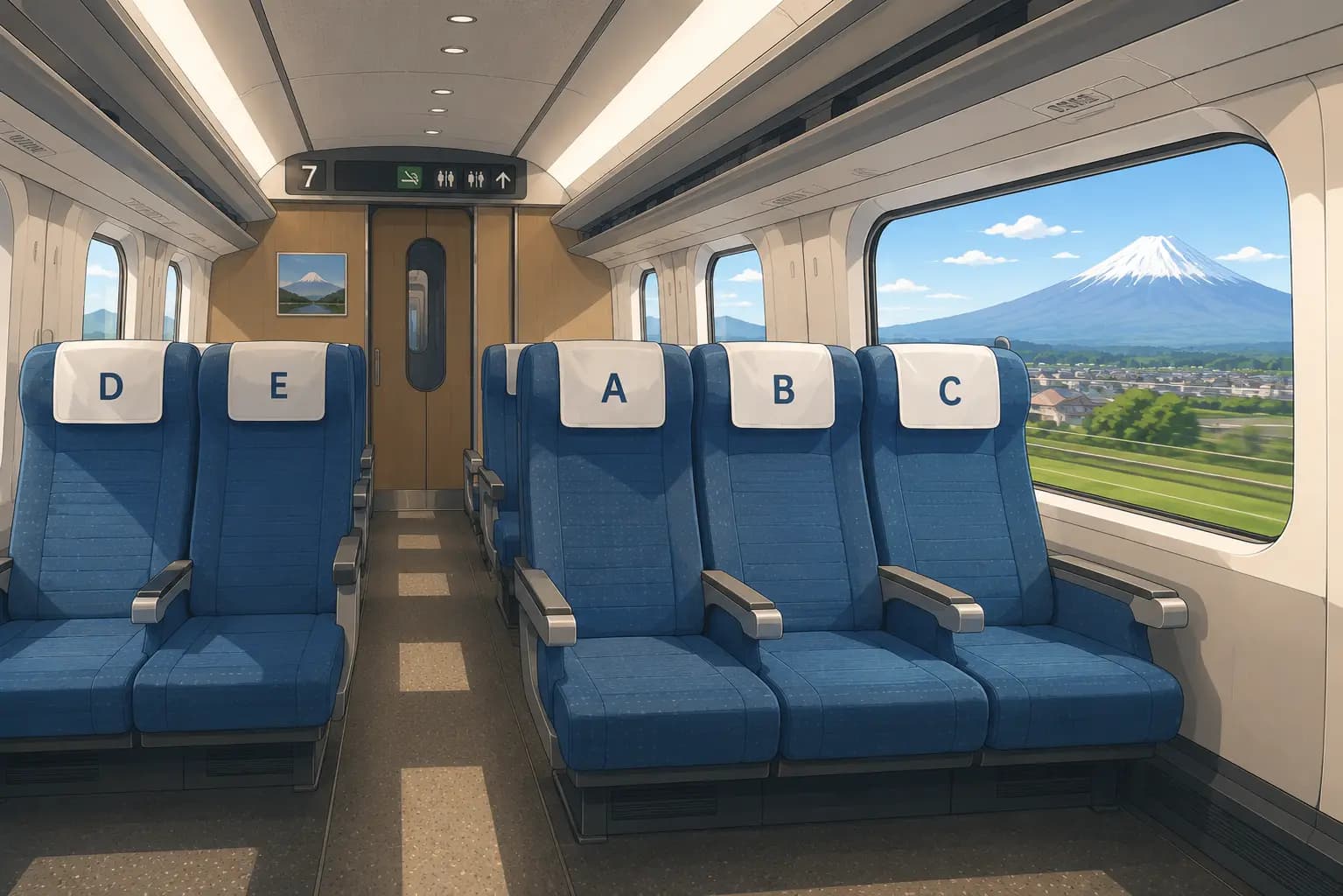
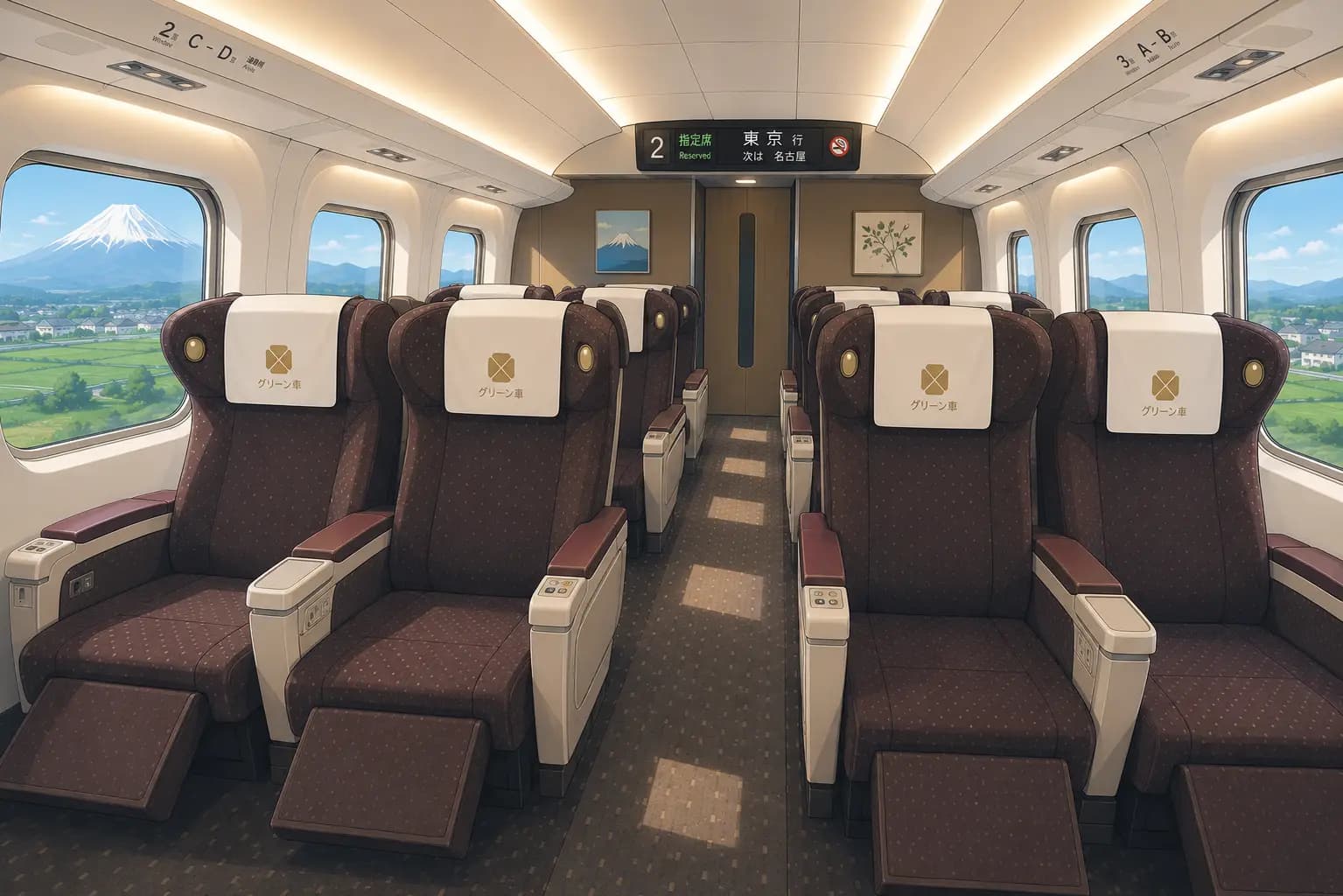
Economy class interior of the Kyoto to Tokyo train

Book Trains from Kyoto to Tokyo

Kyoto to Tokyo Train Information

Shinkansen Nozomi and Hikari services on the Tokaido Shinkansen cover the 513 km between Kyoto Station and Tokyo Station in as little as 2 hours 7 minutes, with 162 daily departures running from 06:14 to 21:38. Along the way you may catch a fleeting glimpse of Mount Fuji from the right-side window seats. On board you'll find allocated seating in Economy or Green Car (business class), power outlets, a buffet car, and free Wi-Fi. Browse the full schedule and book your Shinkansen ticket from $135 — your e-ticket arrives instantly, no queuing required.

Kyoto
Tokyo

513 km

2h 7m
Shortest Travel Time
$135
From
162
Daily Trains
06:14
Earliest departure
21:38
Latest departure

Interesting facts about Japanese trains

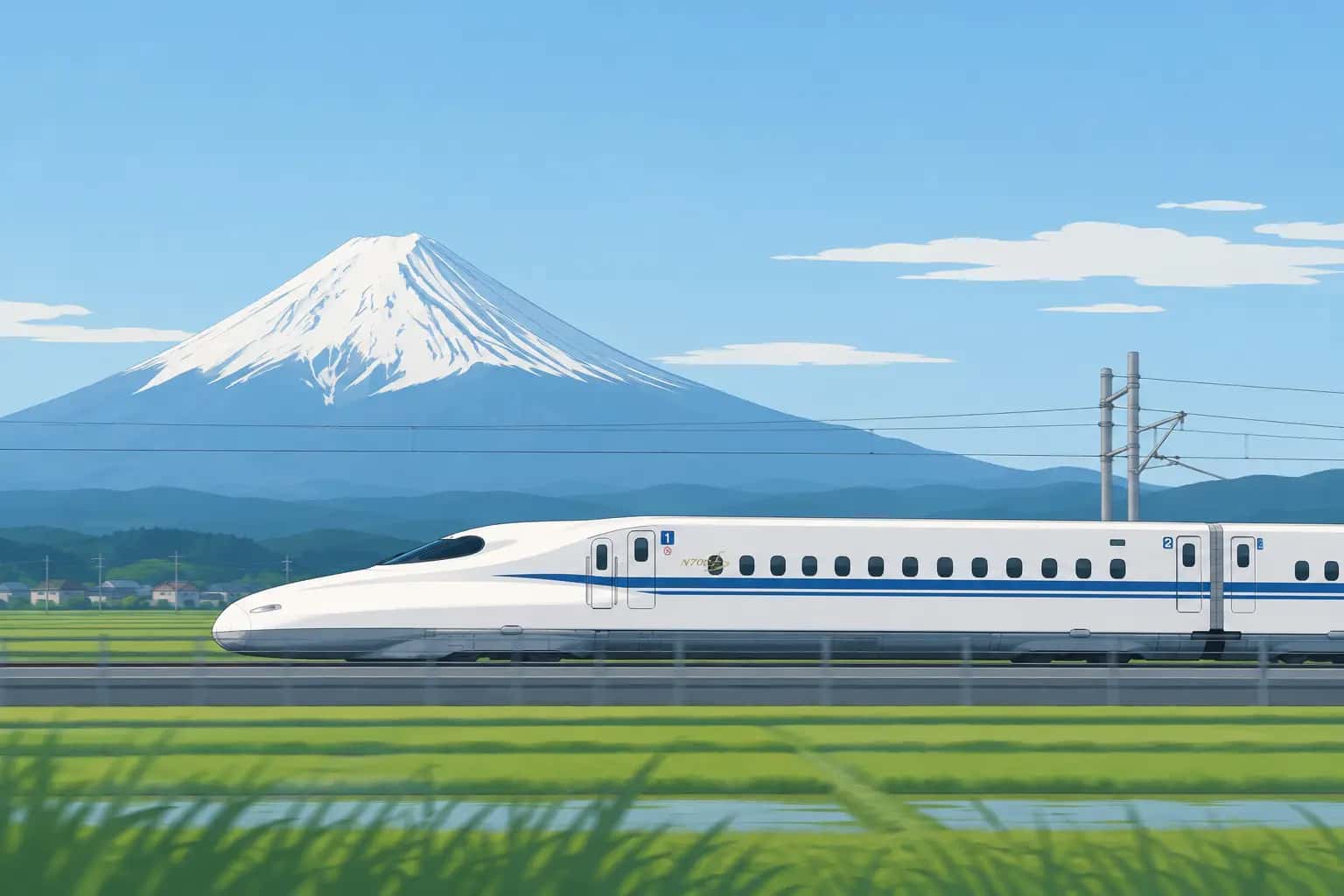
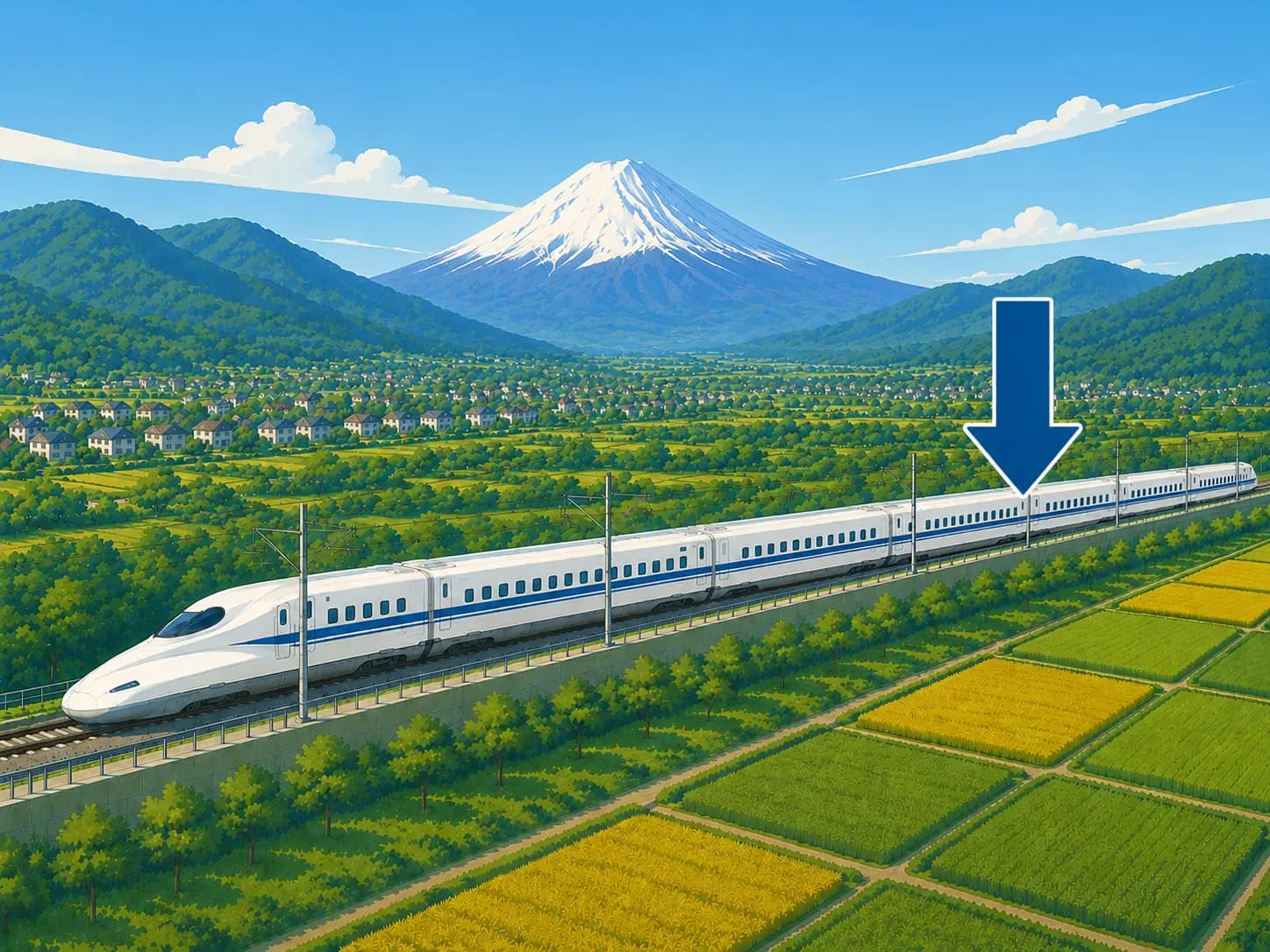
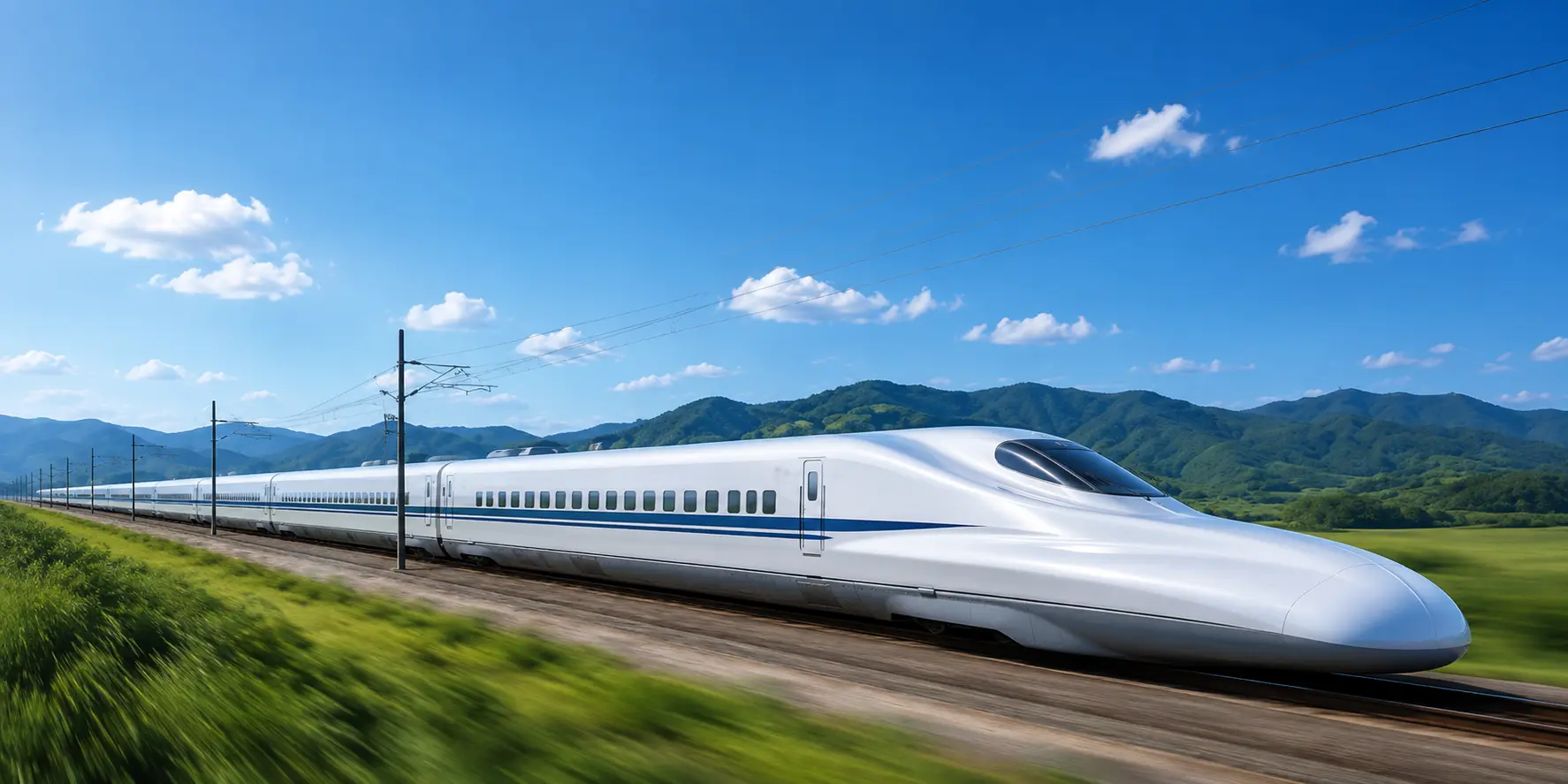
Shinkansen N700S bullet train speeding through the Japanese countryside with Mount Fuji in the background

The fastest train on earth

The Shinkansen N700S reaches 320 km/h in regular service — and the experimental SCMaglev has hit 603 km/h in tests. No other passenger rail network in the world matches Japan's combination of speed, frequency and reliability at this scale.

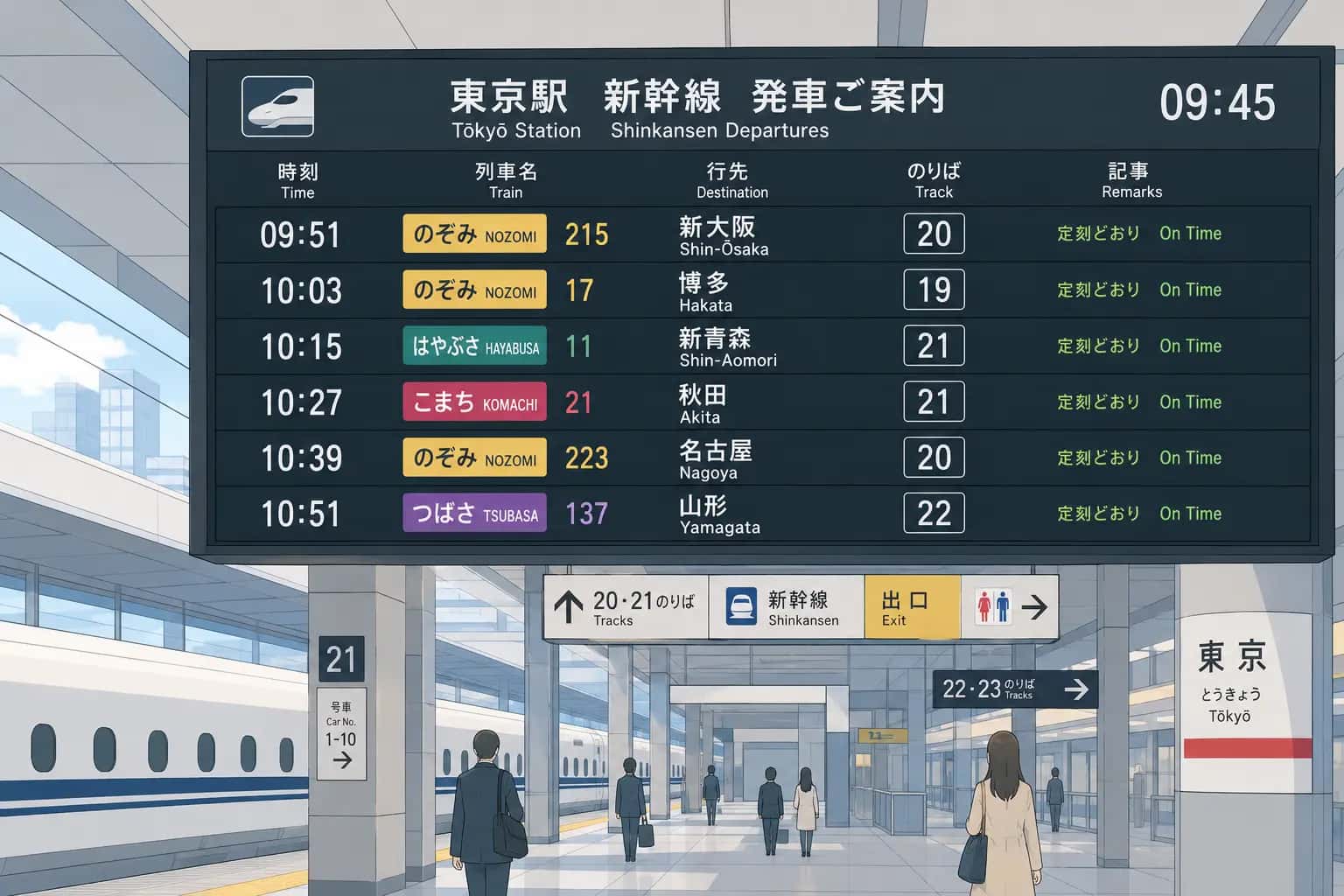
Electronic departure board at Tokyo Station showing multiple Shinkansen departures all on time

Punctuality that borders on obsession

The average Shinkansen delay is under one minute per trip — and that average includes delays caused by earthquakes and typhoons. If a train is more than five minutes late, passengers receive a formal delay certificate to excuse their tardiness at work.

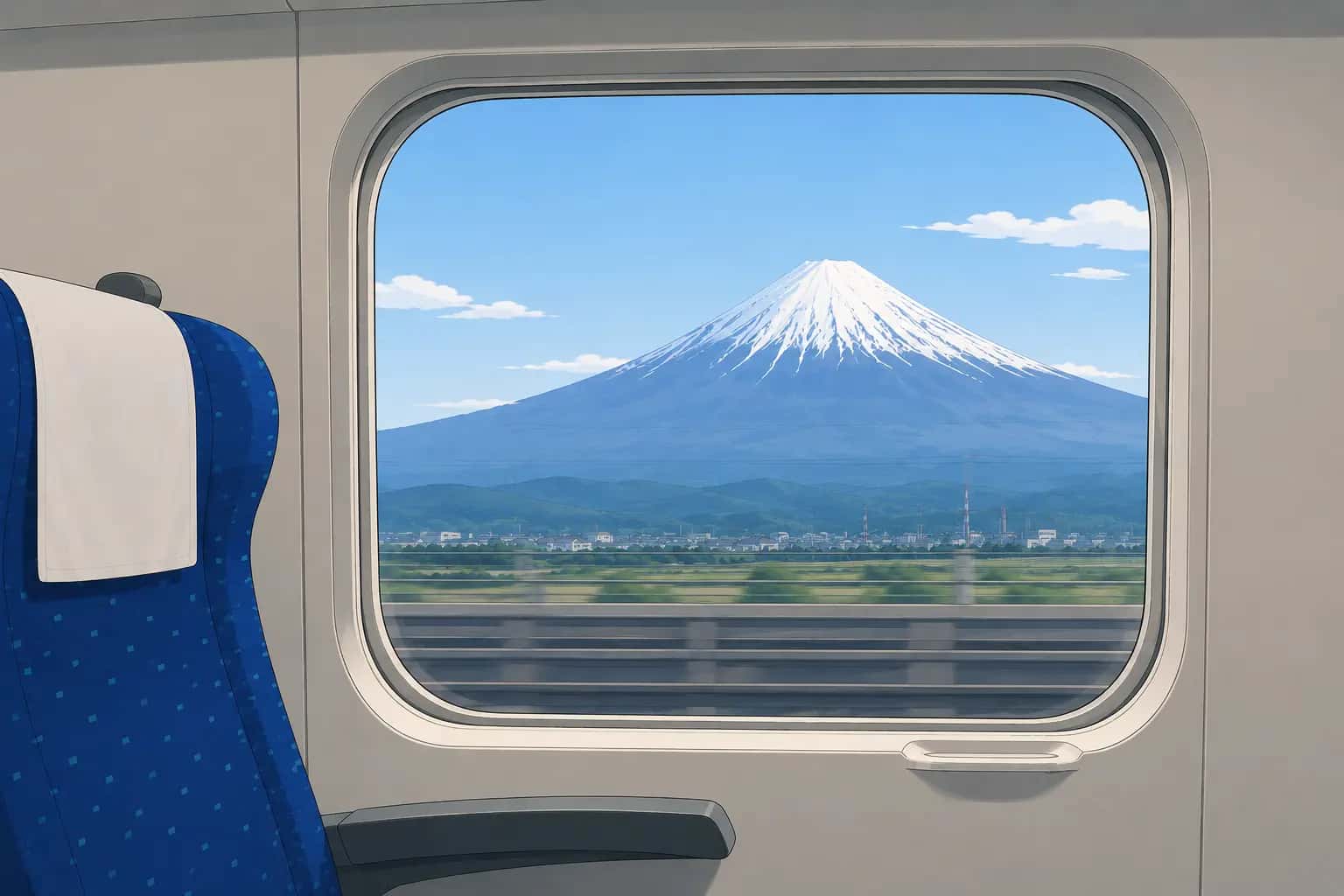
View of snow-capped Mount Fuji from a Shinkansen window seat on the Tokaido line

Mt Fuji from the right seat

On the Kyoto–Tokyo route, seats on the right side (D and E window seats travelling toward Tokyo) offer a clear view of Mount Fuji on a clear day between Shin-Fuji and Shin-Yokohama. It's one of the most iconic views in Japan — and it lasts about 30 seconds at 300 km/h.

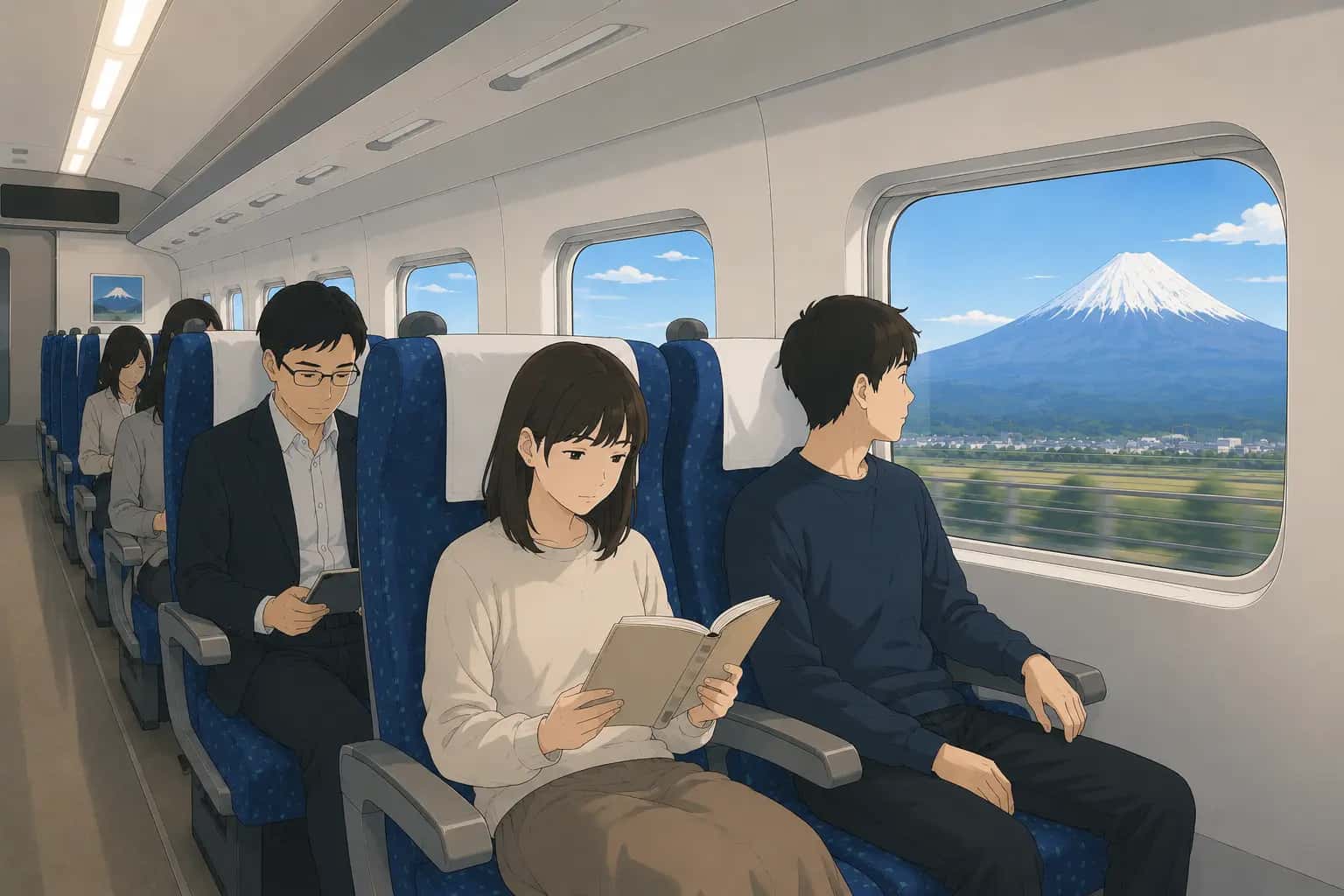
Quiet, orderly passengers seated in a Shinkansen carriage reading and looking out the window

No tipping, no chaos, no noise

Japanese train culture is famously quiet. Phones on silent, conversations at a murmur, and eating only on long-distance services. It's not just a rule — it's a deeply ingrained social norm that makes the journey genuinely relaxing.

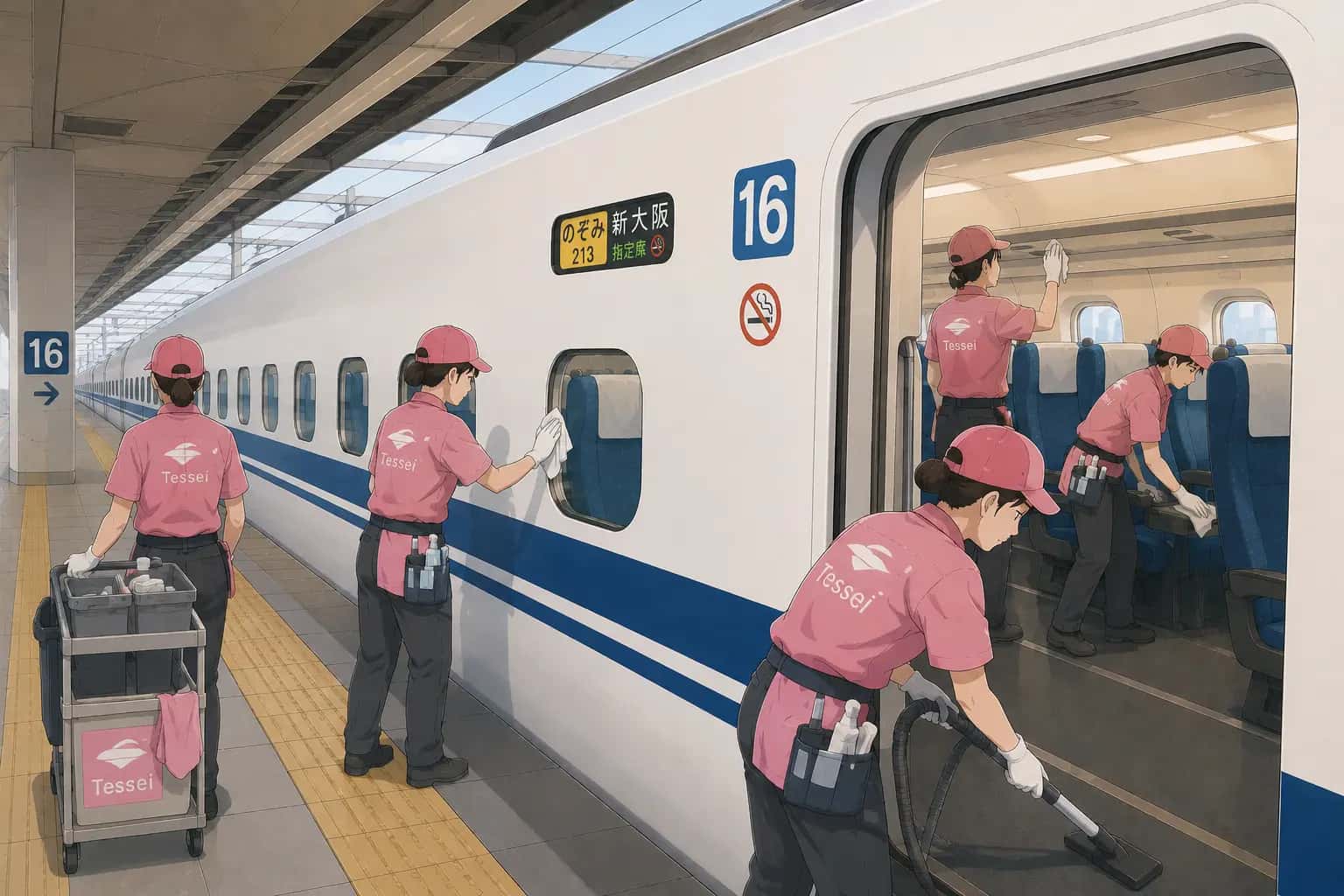
Tessei cleaning crew in pink uniforms preparing a Shinkansen carriage at Tokyo Station in seven minutes

Obsessively clean trains

Each Shinkansen is cleaned in exactly seven minutes at the terminal by the legendary Tessei cleaning crew. Every seat is turned, tray tables wiped, floors vacuumed, and windows checked — before the next load of passengers even boards. It has become a management case study worldwide.

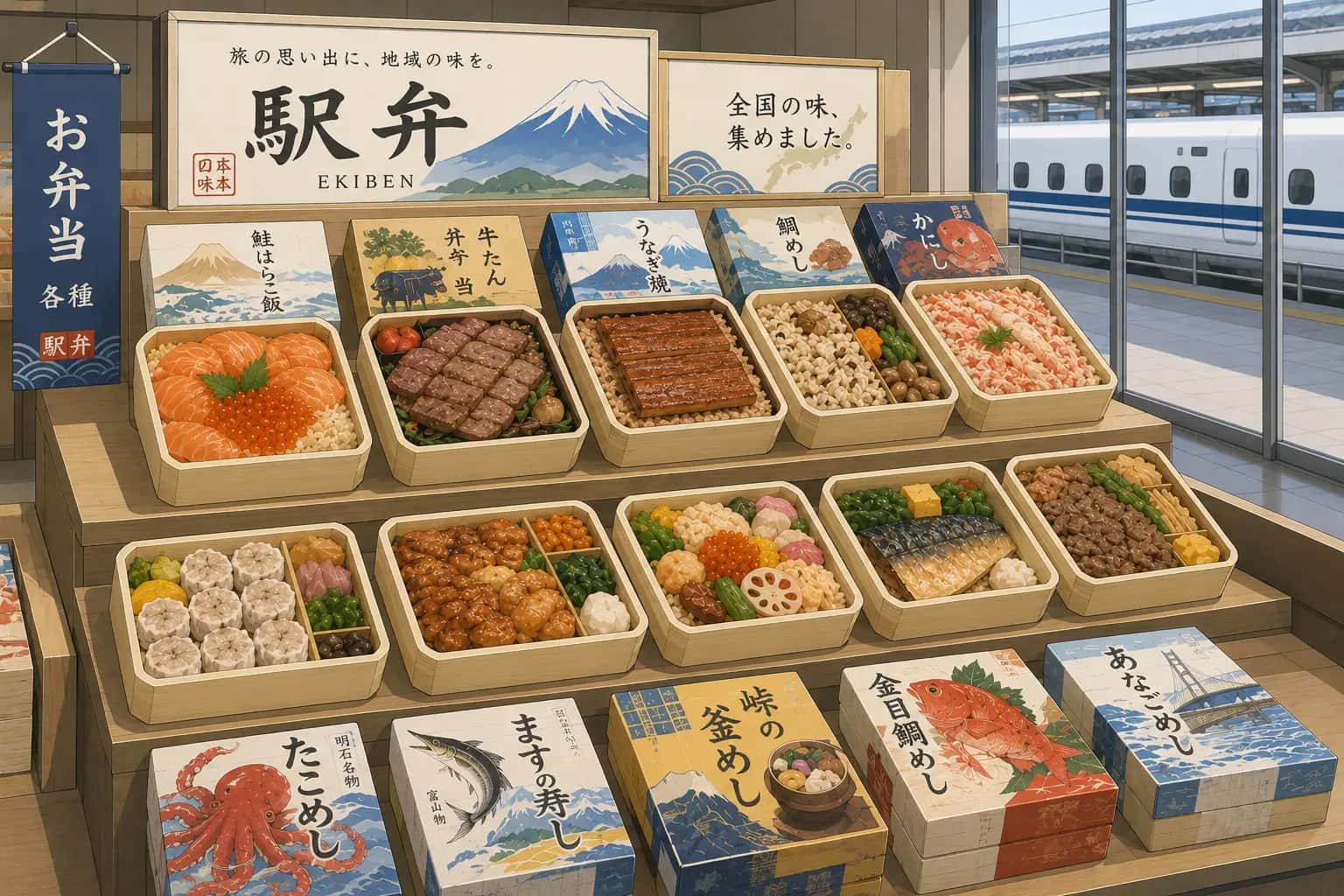
Variety of Japanese ekiben bento boxes on display at a Shinkansen station shop in Japan

A bento at every station

Ekiben — station bento boxes — are a Japanese institution. Each station sells regional specialities, and collecting them is a hobby for many Japanese travellers. Eating on long-distance Shinkansen is perfectly acceptable and very much encouraged.

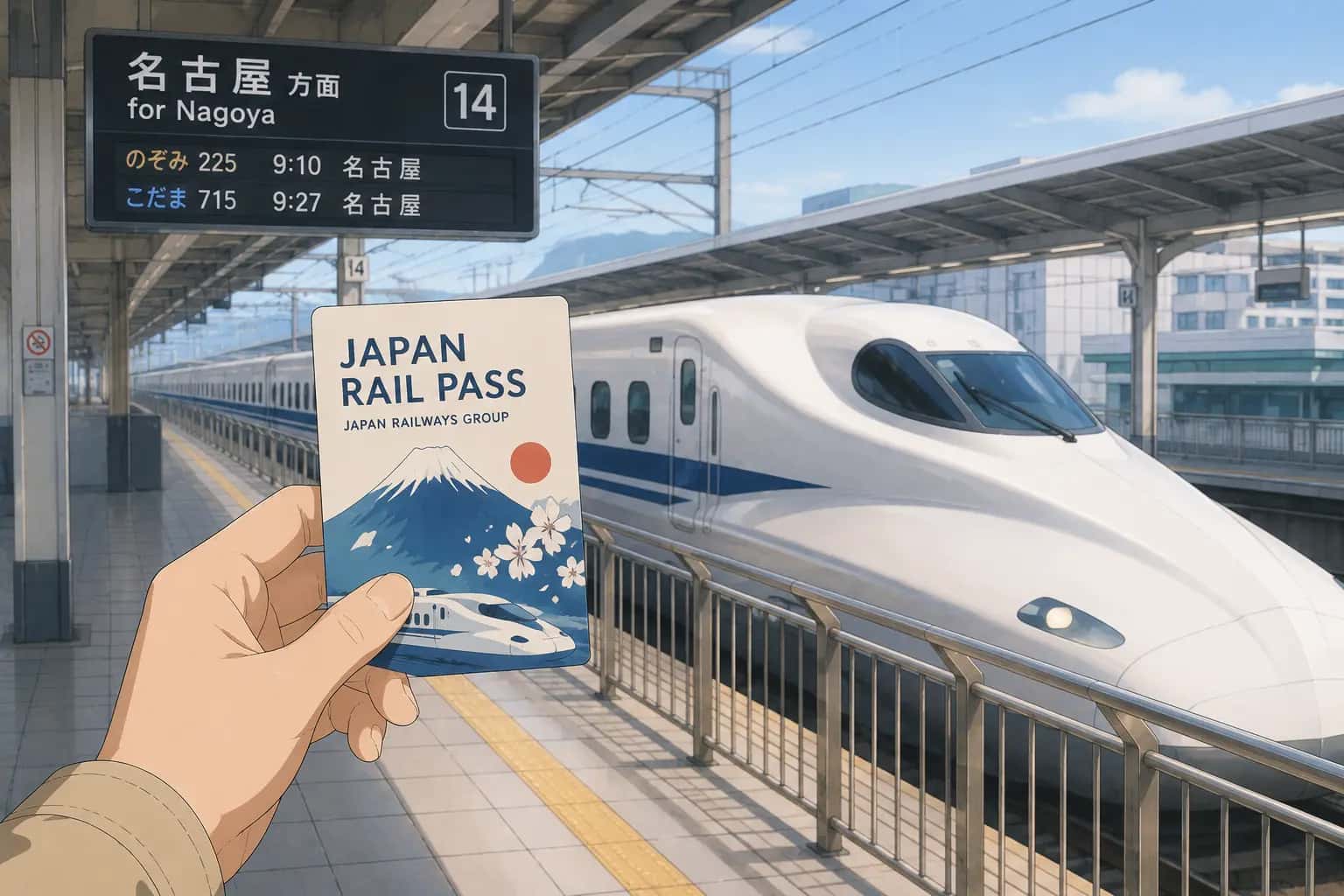
Japan Rail Pass card held up by a tourist in front of a Shinkansen at a Japanese train station

Japan Rail Pass

The Japan Rail Pass lets foreign visitors ride almost all Shinkansen and JR trains across Japan for one flat price. On the Kyoto–Tokyo route alone, a 7-day pass pays for itself in just two return trips. It's one of the best travel deals in the world.

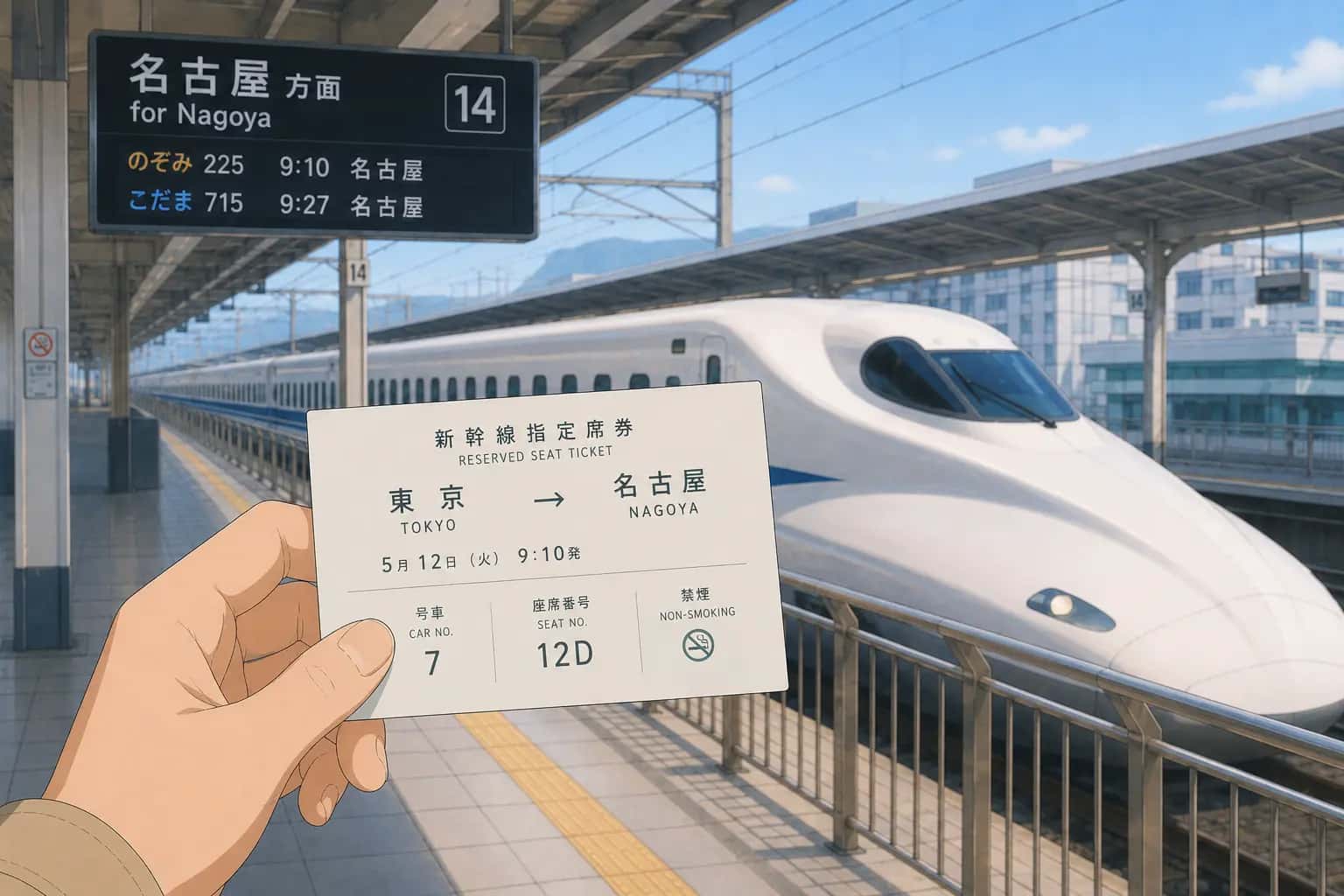
Shinkansen reserved seat ticket showing carriage number, seat number and departure time in Japan

Reserved vs unreserved

Every Shinkansen has both reserved and unreserved carriages. Reserved seats (指定席) guarantee your specific seat; unreserved (自由席) is first-come first-served. On busy holiday periods the unreserved carriages fill fast, so reserving in advance is strongly recommended.

Insights about Kyoto and Tokyo train stations

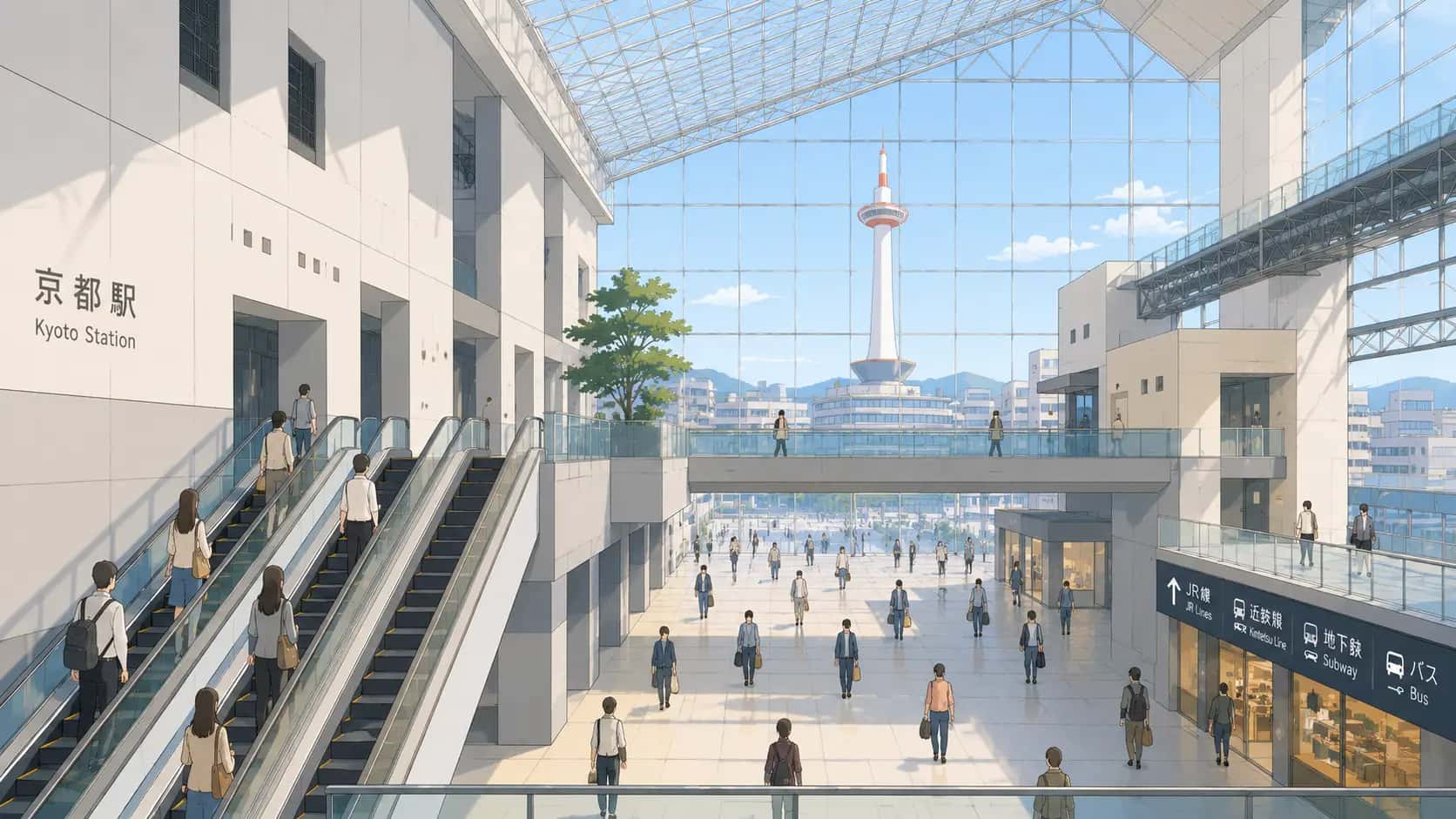
Grand interior atrium of Kyoto Station with glass ceiling and passengers on escalators and walkways
Station names are straightforward

Tokyo Station is Tokyo Station, and Kyoto Station is Kyoto Station — no confusing suburb names or multiple city terminals to worry about. Both are the main central stations of their respective cities, and both are directly on the Tokaido Shinkansen line. Your ticket will say exactly where you depart and arrive.

Both stations are massive complexes with shops, restaurants and onward transport connections — but the Shinkansen platforms are well signposted in English throughout, so finding your way is straightforward even on your first visit.

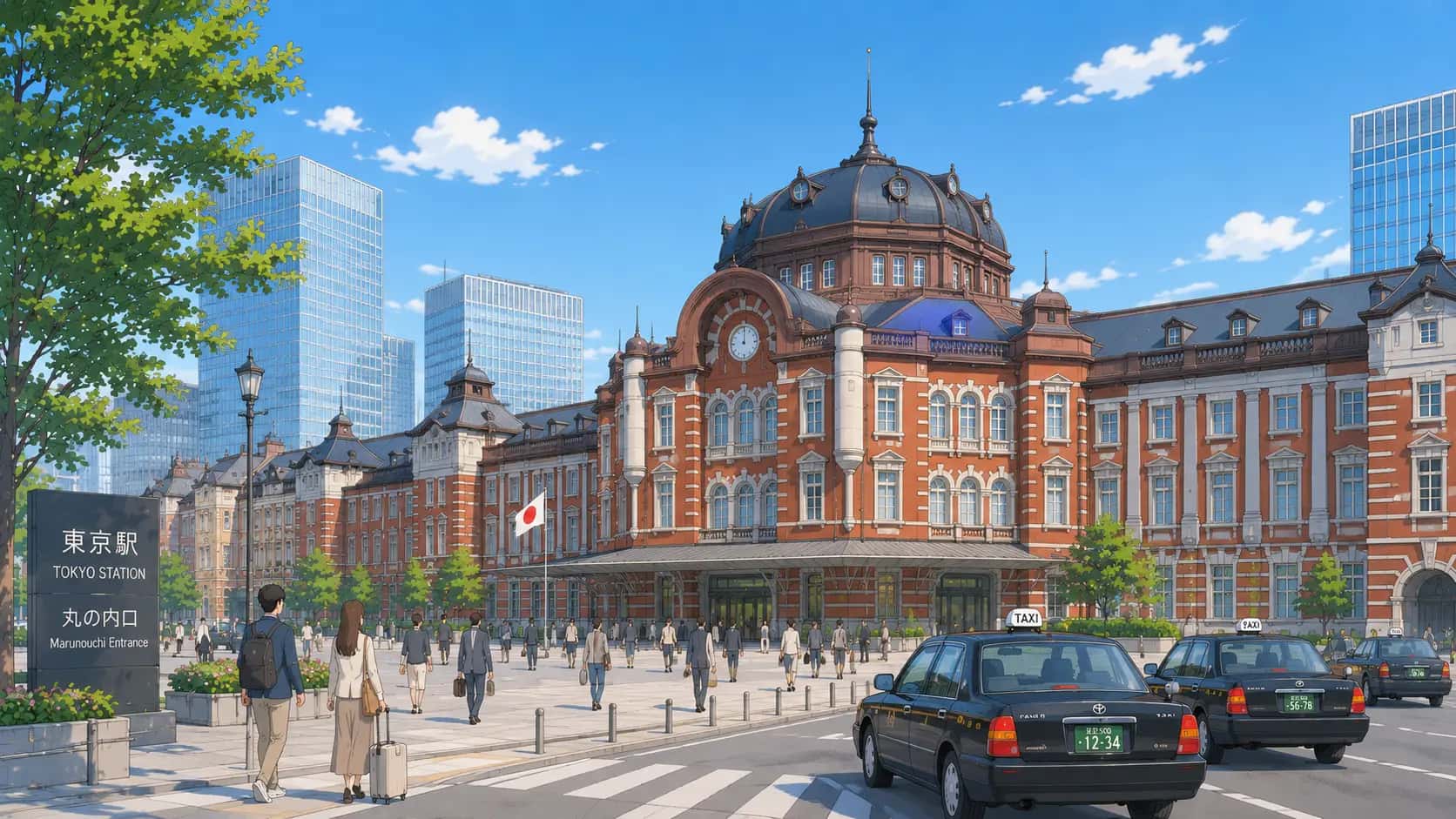
Classic red-brick facade of Tokyo Station Marunouchi side with taxis and passengers outside
At the station

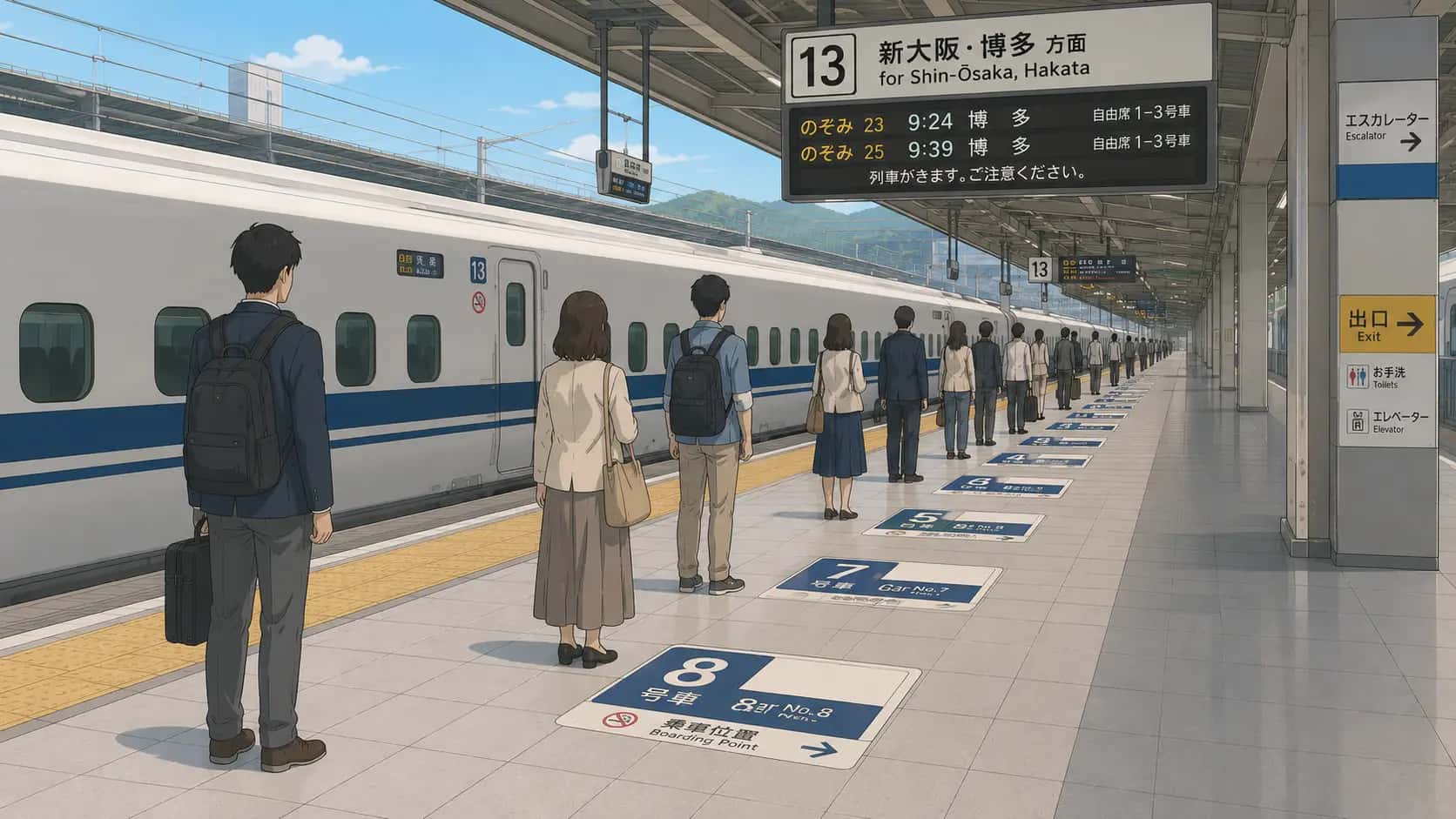
Arrive at least 20 minutes before departure. Your Shinkansen platform number appears on the overhead boards about 10–15 minutes before departure — don't panic if it's not shown yet. Once you have your platform, head there and find the car-position marker on the floor matching your carriage number. The train pulls in with surgical precision — your door will stop exactly at that marker. Board in queue order, let exiting passengers off first.

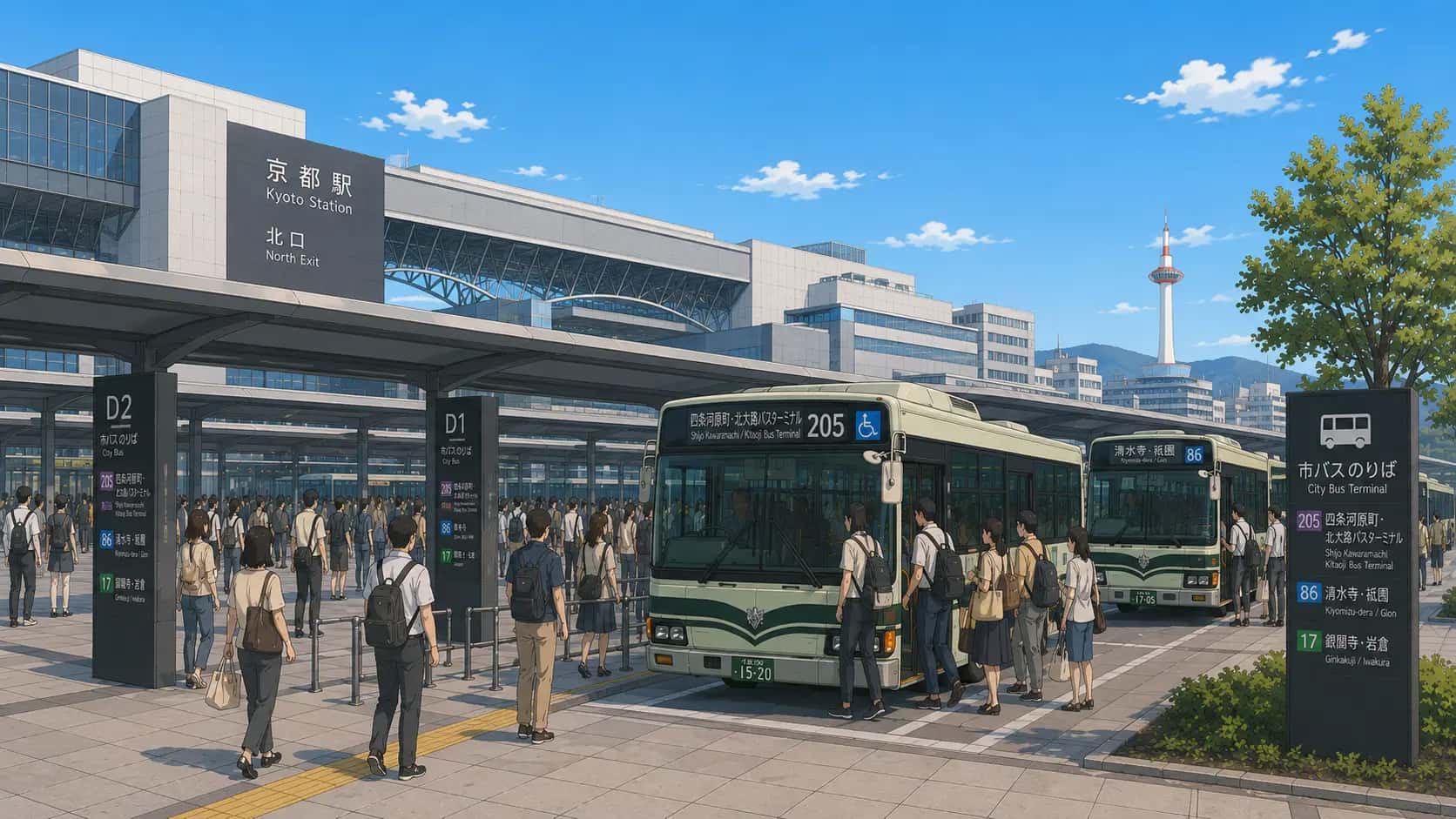
Busy bus terminal outside Kyoto Station north exit with passengers boarding city buses
Leaving the train

The Shinkansen stops for about 90 seconds at Tokyo Station, so have your bags ready before arrival. Overhead racks and end-of-car luggage spaces need to be cleared before the doors open — don't leave anything behind, as the cleaning crew turns the train around in seven minutes. Follow the signs for 中央口 (Central Exit) or 八重洲口 (Yaesu Exit) depending on where you're headed.

Shinkansen platform at a Japanese station showing car-position markers on the floor and passengers waiting in line
Arriving in Tokyo

Tokyo Station has two main sides: Marunouchi (west, red-brick facade, facing the Imperial Palace) and Yaesu (east, facing Ginza and Tokyo Tower). Taxis queue outside both exits. The station connects directly to the Tokyo Metro and JR lines for onward travel anywhere in the city. If your hotel is in Shinjuku, Shibuya or Harajuku, the JR Yamanote Line from Tokyo Station gets you there in 25–35 minutes.

Luggage on Kyoto - Tokyo Shinkansen

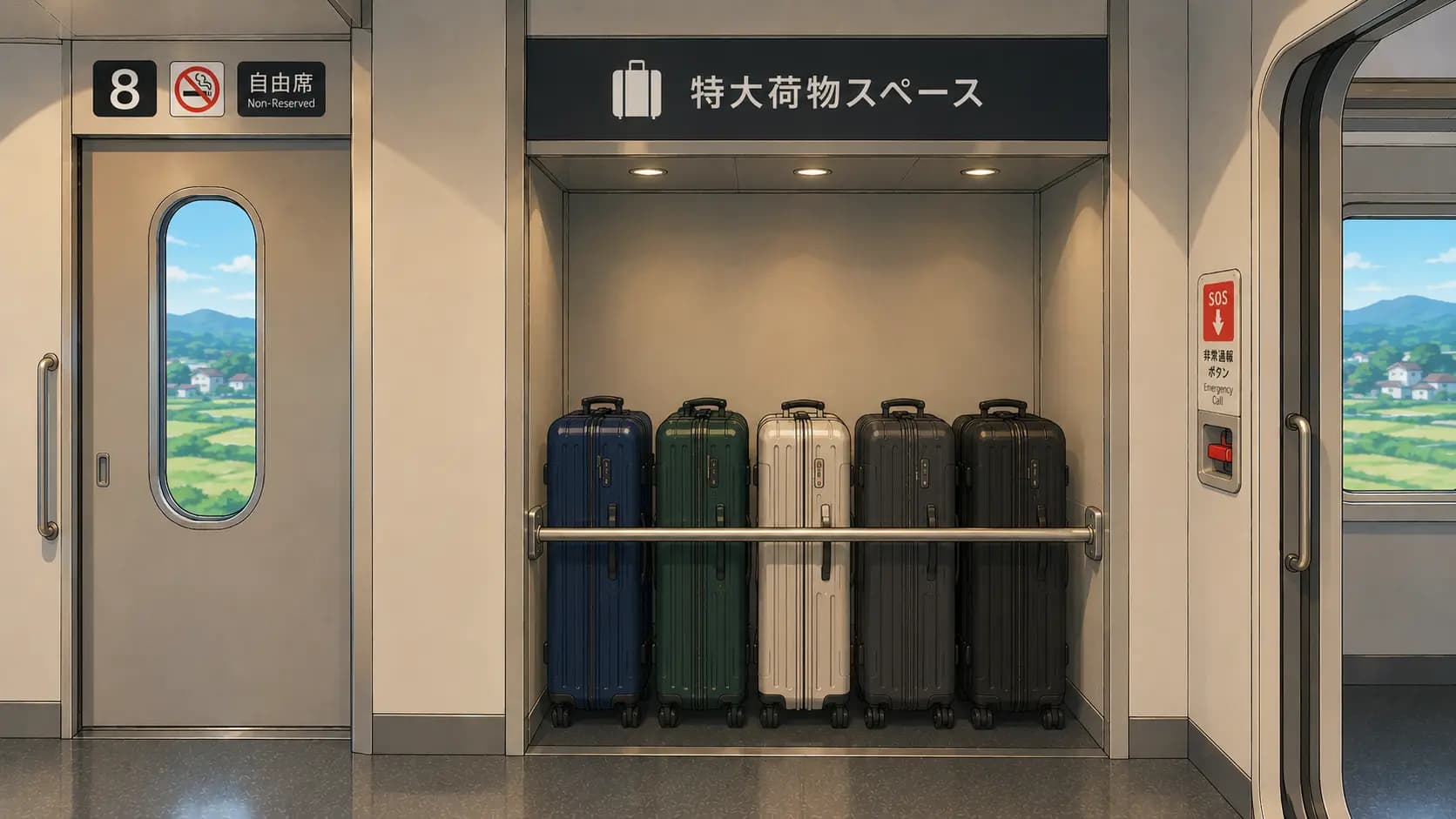
Large suitcases stored in the designated luggage area

No check-in, no fees

There is no luggage check-in on Shinkansen. You take your bags with you and there are no fees. However, since October 2020 JR has introduced a rule for large luggage: bags exceeding 160 cm total dimensions require a "large baggage reservation" (予約制大型荷物) — book this when buying your ticket. There is no extra charge, just a designated storage space behind the last row of seats.

Overhead racks hold smaller bags and backpacks. Large suitcases go in the dedicated luggage space at the end of each carriage. On the Nozomi, Hikari and Kodama services there are also lockable compartments behind the rear seats for reserved large-luggage spots. Luggage is not supervised — keep valuables with you.

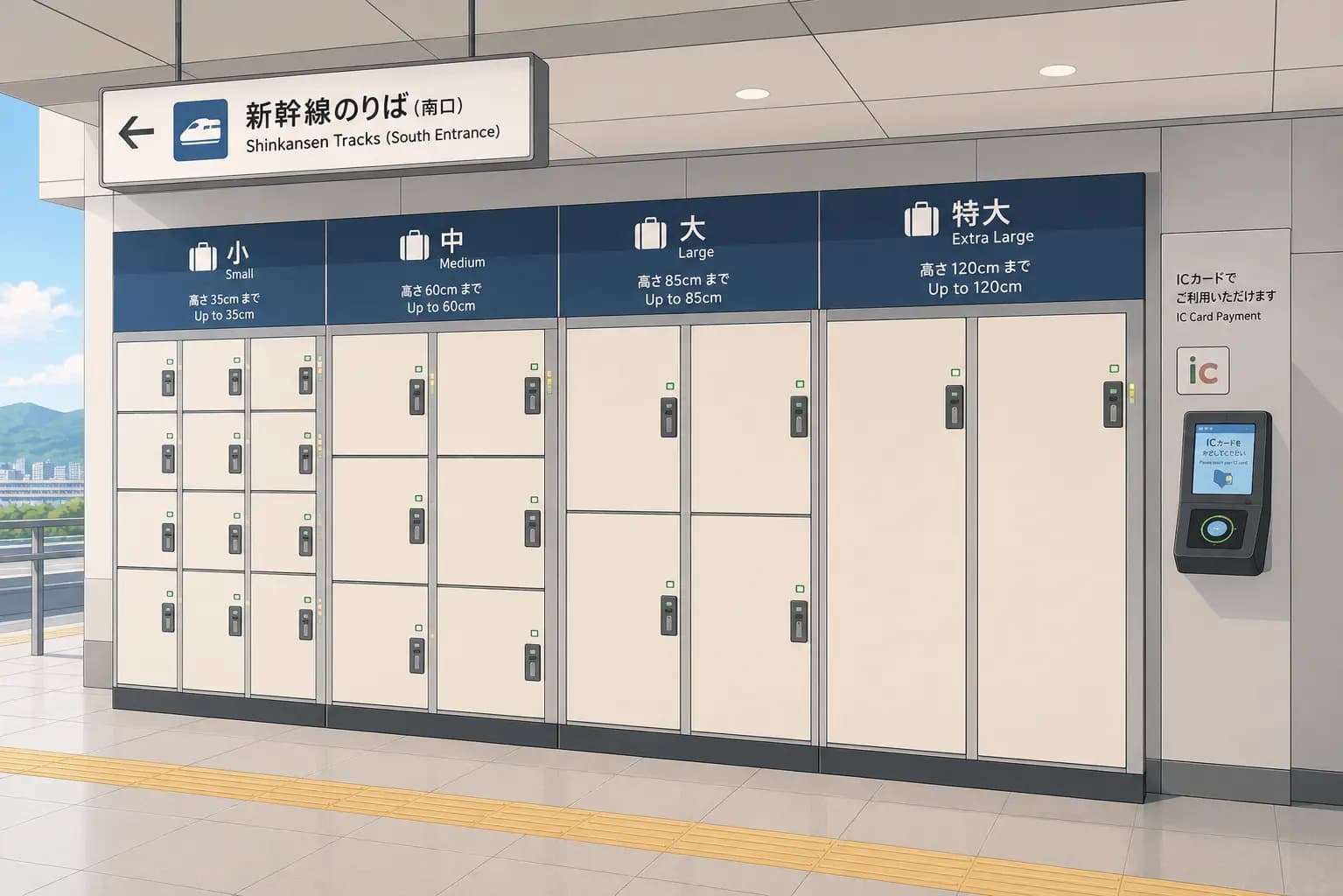
For very large items such as bicycles or surfboards, contact JR in advance. Most stations have coin lockers in a wide range of sizes — extremely useful if you're spending the day sightseeing before or after your train and don't want to drag a suitcase around Kyoto or Tokyo.
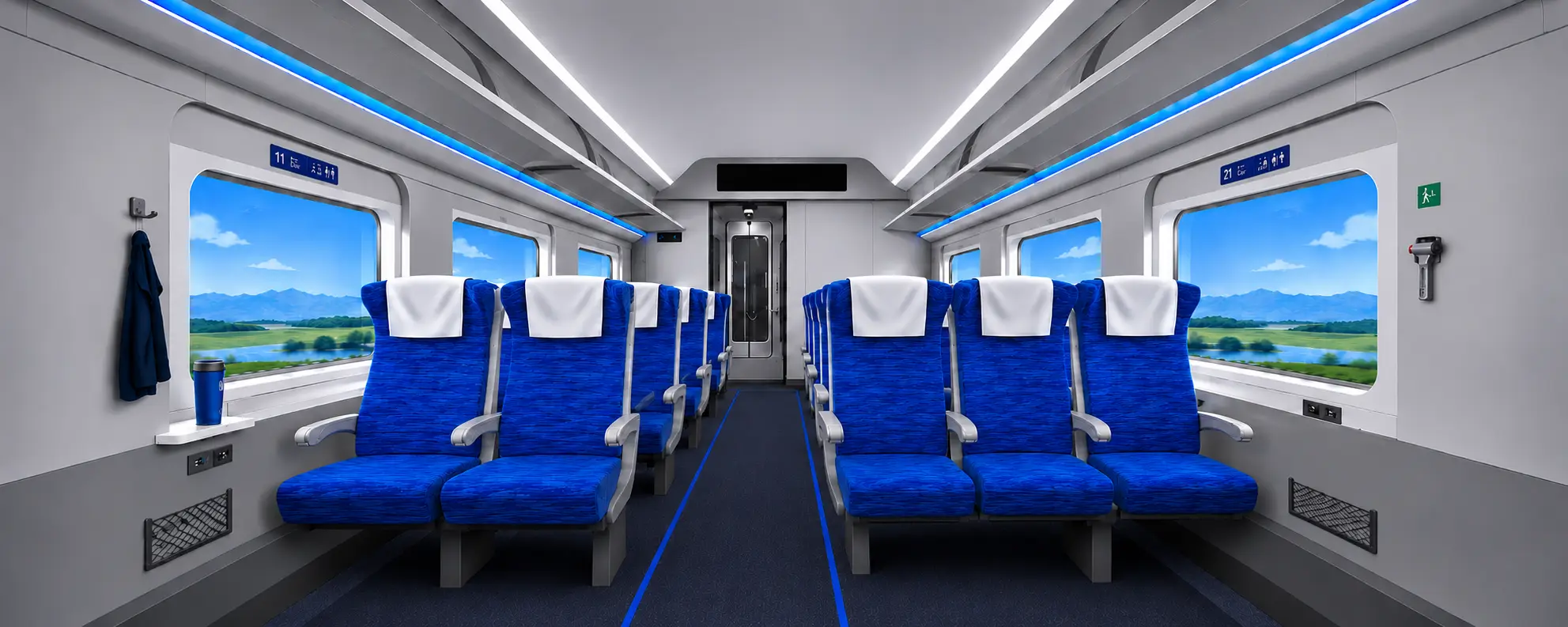
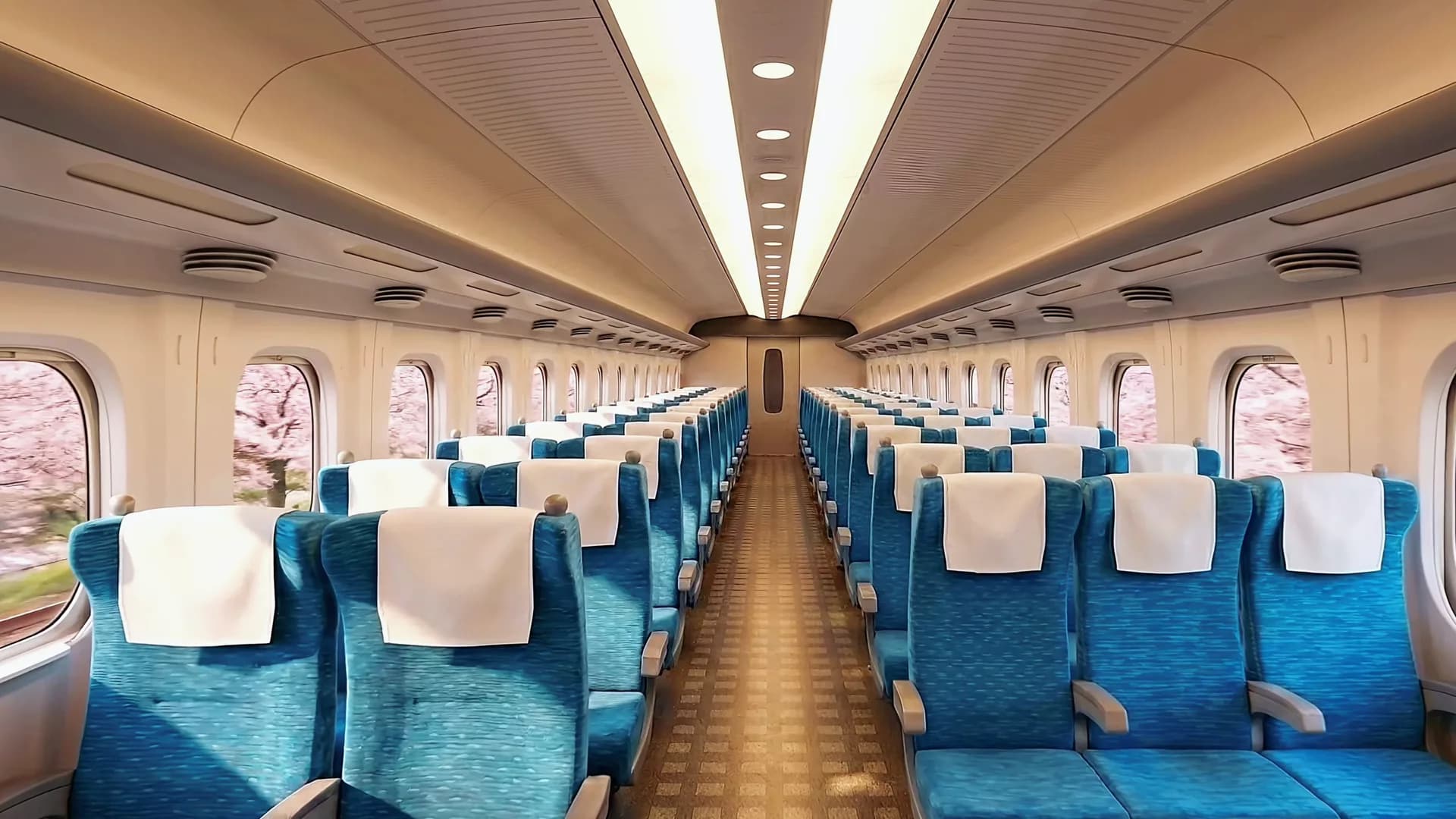
Seat numbering and the famous Fuji view

  • Seats are labelled A, B, C, D and E. A and B are on the left side (2-seat side), D and E are on the right (window and middle of the 3-seat side), with C in the aisle.
  • Travelling from Kyoto toward Tokyo, sit on the right side (D or E seat) for the best chance of seeing Mount Fuji between Shin-Fuji and Shin-Yokohama stations on a clear day. The view appears on the left side heading back toward Kyoto.
  • Travelling from Tokyo toward Kyoto, the Fuji view shifts to the left side (A or B seats). If seeing the mountain is a priority, check the weather forecast and aim for a morning departure when visibility is best.
  • The Nozomi and Hikari run the full Kyoto–Tokyo route. Kodama stops at every station and takes considerably longer — stick to Nozomi or Hikari for this journey.
Shinkansen seats
Rows of coin lockers at a Japanese Shinkansen station
Station coin lockers

Both Kyoto and Tokyo stations have extensive coin locker facilities in multiple sizes. Perfect for storing luggage while you explore — they accept IC cards and cash and are available 24 hours.

Interior of a Shinkansen middle carriage
The smoothest ride

The middle carriages (roughly cars 7–10 on a 16-car Nozomi) experience the least vibration. If you're prone to motion sickness or want to work on a laptop, aim for these.

Spacious Green Car business class seats
Green Car (business class)

Green Car seats are wider, have more recline, and the carriage is quieter and less crowded. On a 2.5-hour journey it's a genuine upgrade. Worth it for a special occasion or if you want to arrive in Tokyo feeling fresh.

How do I board my Shinkansen train?

1
Arrive at Kyoto Station 20 minutes before departure
2
Buy or collect your ticket

If you have a Japan Rail Pass, exchange it at the JR ticket window and collect your seat reservation. If paying individually, use the green JR ticket machines (English available) or the staffed window. Make sure your ticket shows the correct train number, date and carriage.

3
Find your platform

Shinkansen platforms at Kyoto Station are on the upper floor, accessed via the Shinkansen gates — separate from regular JR and subway gates. Check the overhead boards for your platform number (usually 11–14 at Kyoto). The boards display train name, destination, departure time and carriage composition.

4
Find your carriage on the platform

Yellow car-position markers on the platform floor show exactly where each carriage door will stop. Find the marker for your carriage number and stand in the boarding queue. Queuing in line is standard practice in Japan — follow the markers and the locals.

The Shinkansen stops for around 90 seconds. Passengers exit first, then boarding begins. It is extremely organised and efficient — you will not need to push or rush.

Frequently asked questions

How much does the Kyoto to Tokyo bullet train cost?

Shinkansen tickets start from $135. Reserved Nozomi seats cost more than unreserved; the Green Car (business class) is a further upgrade.

How long is the Kyoto to Tokyo train journey?

The fastest Nozomi Shinkansen takes 2 hours 7 minutes. Hikari takes about 2h24m; Kodama stops at every station and takes longer. There are 162 daily departures from 06:14 to 21:38.

Which side of the train has the Mount Fuji view?

Travelling Kyoto to Tokyo, sit on the right side (D or E seats) to see Mount Fuji between Shin-Fuji and Shin-Yokohama on a clear day. Heading back to Kyoto, the view is on the left (A or B).

Can I use a Japan Rail Pass on this route?

The JR Pass covers Hikari and Kodama trains. The faster Nozomi requires a supplementary fee and is not fully covered by the standard pass.

What is the luggage rule on the Shinkansen?

There is no check-in and no fees. Bags over 160 cm total dimensions need a free "large baggage" reservation made when you book; smaller bags use the overhead racks.

Which Shinkansen should I take — Nozomi, Hikari or Kodama?

Take the Nozomi or Hikari for the Kyoto-Tokyo route. The Nozomi is fastest (2h07m); Hikari is covered by the JR Pass; Kodama stops everywhere and is slower.

Where do the trains depart and arrive?

Trains run between Kyoto Station and Tokyo Station, both directly on the Tokaido Shinkansen line. Tokyo Station has two sides: Marunouchi (Imperial Palace) and Yaesu (Ginza).

Japan Shinkansen from Kyoto to Tokyo

Ride the world's most iconic bullet train through the heart of Japan — past Mount Fuji, across ancient provinces and into the greatest city on earth, in just over two hours.

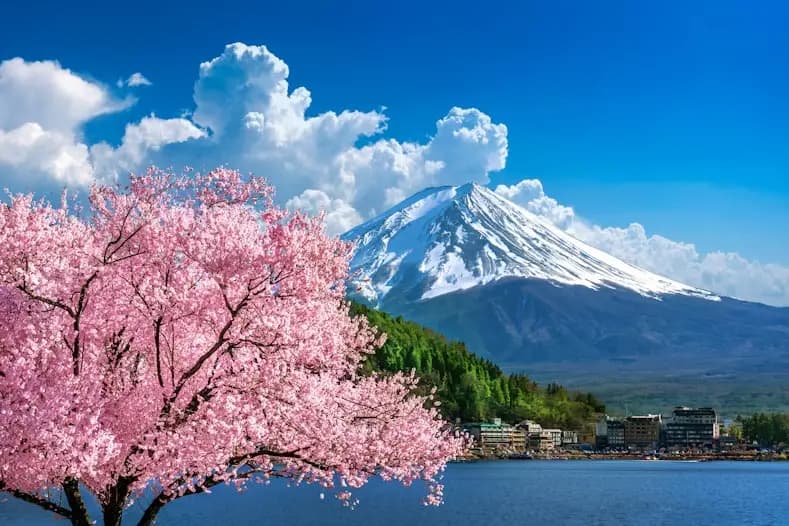
Snow-capped Mount Fuji
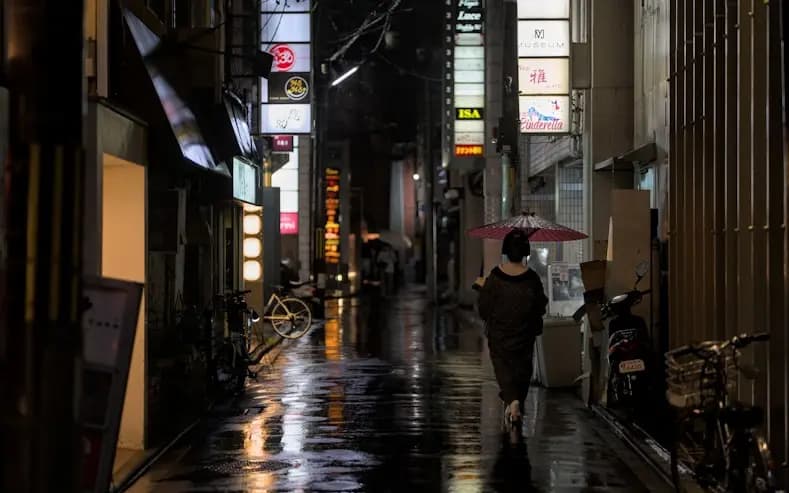
Kyoto geisha district Gion
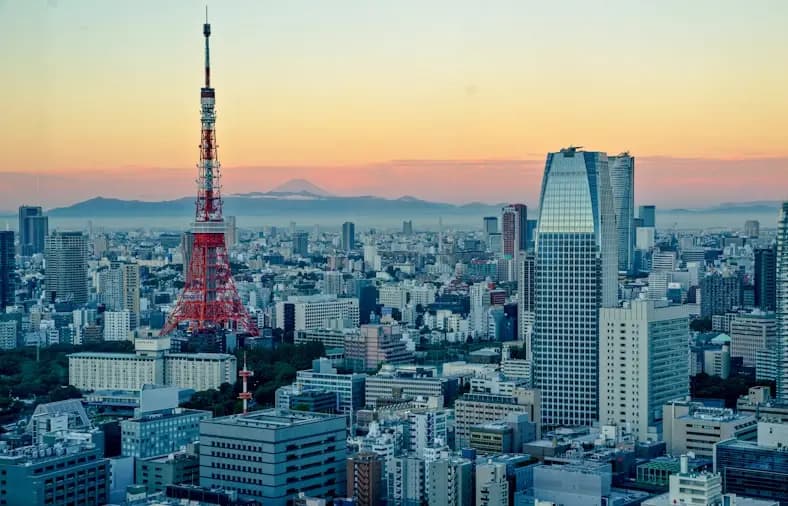
Tokyo skyline at night

The smartest way to book Japan Shinkansen tickets

Meet the AI specialist for Japan rail — Shinkansen fares, timetables and seat reservations sorted in seconds.

Shinkansen N700S bullet train